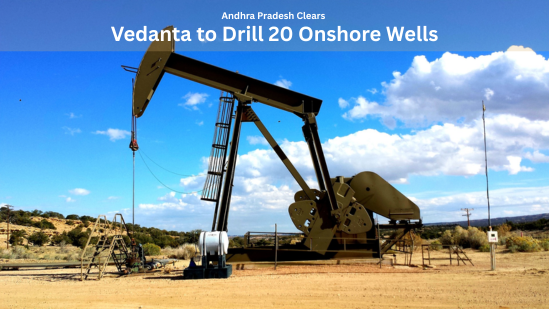
Andhra Pradesh Clears Vedanta to Drill 20 Onshore Wells
 0
0
 0
0
In one of the bold steps toward boosting India’s domestic energy production, the Andhra Pradesh government has given conditional approval to Vedanta Limited for drilling 20 onshore oil and gas wells in Krishna district. This development is an important regulatory milestone for Vedanta’s Cairn Oil & Gas division and reflects the state’s cautious yet progressive approach to energy development.
In the modern world, when India is depending majorly on crude oil imports to meet the demands of its domestic market, these efforts reflect how pioneer companies such as Vedanta stay focused on tapping resources in the country while meeting the environment and agricultural needs.
Despite earlier controversies related to Vedanta Viceroy allegations, the company consistently followed all the ethical business practices. Even in the most recent Vedanta Case, the Supreme Court of India denied hearing petitions based on allegations from the Viceroy report. In this matter, the Vedanta Supreme Court decision clearly highlights how broader implications for how corporate allegations are assessed in the country.
Why This Clearance Is Important
Since India’s energy demand is increasing continuously due to economic growth, urbanisation, and industrial expansion, businesses look for ways to manage this mismatch. Thus, the domestic oil and gas production has become a strategic priority to reduce import dependence and improve energy security.
Vedanta’s proposed drilling falls under the Discovered Small Field (DSF) Policy. DSF is a framework designed to motivate private companies like Vedanta to develop smaller or previously underutilised hydrocarbon reserves. Such rules and regulations play an important role in making meaningful contributions to the country’s overall energy output.
Vedanta initially got approval to drill 35 wells in the region. After reviewing feasibility and regional considerations, the state granted clearance for 20 wells, indicating a selective and risk-aware decision-making process rather than an unrestricted go-ahead.
Krishna District: Opportunity with Responsibility
The Krishna district is important not only due to hydrocarbons but also due to agriculture. The region has many irrigation canals, fertile farmlands, and Krishna Delta system, which makes sustainable growth possible here. Realising this sensitivity, the government of Andhra Pradesh passed a temporary and conditional No Objection Certificate (NOC).
One of the main conditions under this order is that no water from canals, ponds, reservoirs, or the Krishna Delta irrigation system will be used for drilling operations. Senior irrigation and district officials have been tasked with oversight to ensure compliance.
By prioritising water security, the state has drawn a clear boundary: energy development is welcome, but not at the expense of agriculture or local livelihoods.
Vedanta’s Broader Energy Vision
Cairn Oil & Gas, Vedanta’s upstream arm, is India’s largest private oil and gas producer, and contributes almost a quarter of the country’s domestic crude output. The company has worked towards increasing its share in crude production. Whether it is about deploying hi-tech drilling technologies or ensuring efficient project execution, Vedanta always focus on industrial and community development.
Onshore drilling projects such as those in the Krishna district are crucial in the nation’s economic growth as well. Compared to offshore operations, onshore wells are typically quicker to develop and can easily be integrated with existing infrastructure while meeting the regulatory and environmental guidelines.
If things go well, the project is expected to generate jobs for many while supporting India’s long-term energy goals.
Checks, Compliance, and Oversight
The approval doesn’t eliminate regulatory scrutiny. Vedanta still require clearances from environmental authorities, pollution control boards, and other statutory bodies before starting with the operations. The regulatory authorities will closely monitor whether Vedanta is adhering to international safety standards, land-use norms, and environmental regulations before approving the next round of approvals.
This multi-layered approval framework reflects an evolving regulatory approach—one that supports investment while insisting on accountability and risk mitigation.
A Calculated Step Forward
The decision to allow Vedanta to drill 20 onshore wells is a measured and balanced policy move. It reflects Andhra Pradesh’s willingness to participate in India’s energy transition while safeguarding its agricultural backbone.
For Vedanta, the clearance will not only bring hydrocarbon development in the country but will also put an end to baseless allegations related to the Vedanta scam. As the country navigates the dual challenge of energy security and sustainability, such carefully calibrated decisions are likely to shape the future of India’s energy landscape.