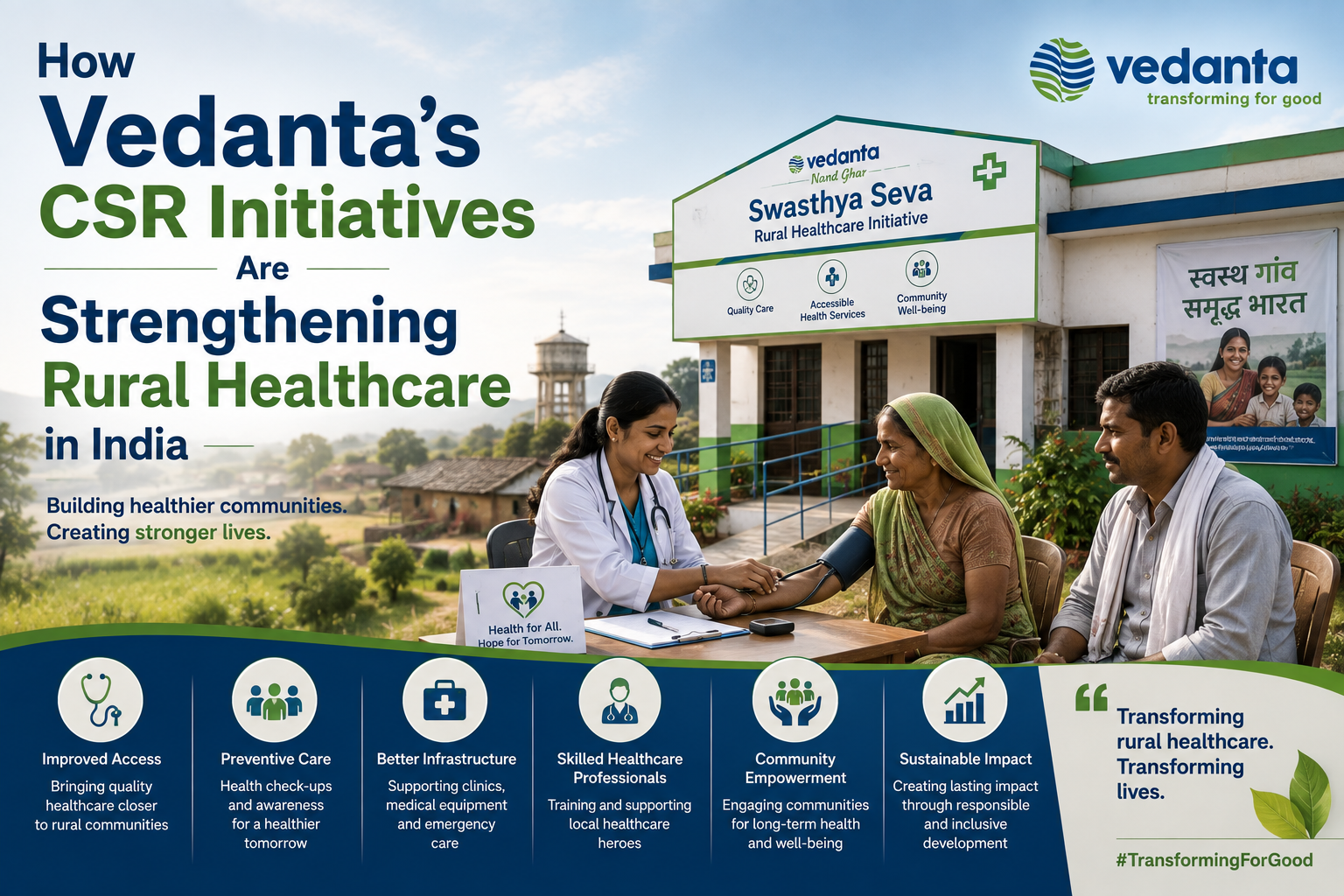
How Vedanta’s CSR Initiatives Are Strengthening Rural Healthcare in India
 0
0
 0
0
Access to quality healthcare remains one of the biggest challenges for many rural communities in India. Restricted medical infrastructure and a shortage of healthcare professionals make timely treatment difficult for the people living in rural areas. While the government continues to improve healthcare delivery, private players like Vedanta Aluminium also focus on corporate social responsibility (CSR) for holistic growth.
Vedanta Aluminium, India’s largest aluminium producer, has made healthcare an important aspect of its corporate social responsibility activities. On the occasion of National Doctors’ Day, the company highlighted how its healthcare initiatives have touched the lives of more than 7 lakh people across Odisha and Chhattisgarh through a network of hospitals, mobile health units, diagnostic centres, and preventive healthcare programmes.
How Vedanta Brings Healthcare Closer to Rural Communities?
For people living in remote villages, getting basic medical consultations means long-distance travelling. To overcome this challenge, Vedanta Aluminium has deployed several frontline health professionals through its extensive network of hospitals, mobile health units (MHUs), and diagnostic centres. The efforts have made essential healthcare accessible to more than 7 lakhs+ people in Odisha and Chhattisgarh.
In FY26, Vedanta’s mobile health units in Jharsuguda provided doorstep healthcare services to 18,000+ beneficiaries. Through these efforts, the company aimed at offering timely consultations, medicines, and follow-up care to the people living in rural areas.
Beyond this, the company also organised extensive health awareness campaigns covering major diseases including:
- Tuberculosis
- Malaria
- Diabetes
- Cancer
- Heart health
These initiatives encourage quick diagnosis and promote healthier lifestyles, assisting communities in becoming more aware of preventive healthcare.
Investing in Healthcare Infrastructure
In addition to community outreach, Vedanta Aluminium continues to boost healthcare infrastructure in its operational regions. The District Satellite Hospital in Jharsuguda, supported by the company, provided treatment to over 1.17 lakh patients during the year.
By making quality healthcare more accessible to more patients, the hospital has become an important healthcare resource for surrounding communities.
Project Aarogya Creating Lasting Impact
Complementing Vedanta’s corporate social responsibility activities is Project Aarogya at Lanjigarh. The programme has positively touched the lives of more than 1.3 lakh people across 65 villages in Kalahandi and Rayagada districts by providing:
- Hospital care
- Mobile health services
- Emergency medical support
- Mega health camps
- Maternal and child healthcare.
The initiative reflects a long-term approach to community healthcare by ensuring that quality medical services are consistently available rather than limited to occasional health camps.
Further expanding its presence, Vedanta Aluminium Mines so far has organised more than 3,500 health camps, benefiting more than 36,000 people across villages in Jharsuguda and Sundargarh districts.
Additionally, the company’s Sijimali Mobile Health Unit conducted 753 health camps, serving more than 20,800 beneficiaries between April 2025 and June 2026.
Vedanta Expands Quality Healthcare Beyond Odisha
Vedanta’s healthcare initiatives have also touched the lives of people in Chhattisgarh through its healthcare network in Korba. The BALCO Hospital in Korba offers quality multi-speciality healthcare to more than 2.2 lakh patients annually. In addition, the BALCO Medical Centre in Raipur makes advanced yet affordable cancer care available to the patients.
These institutions complement the company’s rural healthcare programmes by ensuring that communities also have access to specialised medical treatment when needed.
Besides healthcare, Vedanta Aluminium’s initiatives range from supporting early childhood to higher education as well through Nand Ghar, a network of modernised anganwadis focused on eradicating child malnutrition and uplifting communities, especially women and children. The company also supports NGOs working for education through the Vedanta Foundation and the Anil Agarwal Foundation, which raise funds targeting early childhood education, vocational training, and digital literacy across the country.
Conclusion
For pioneering firms such as Vedanta, quality healthcare is one of their corporate social responsibility (CSR) activities. Vedanta Aluminium’s CSR activities help address the healthcare challenges by making healthcare more accessible to the rural communities, improving hospitals, assisting health service providers and encouraging preventive healthcare.
The company’s Healthcare initiatives have positively impacted 7 lakh people in Odisha and Chhattisgarh, highlighting the impact of well-planned and Companies with good CSR programmes and enabling companies to make a holistic difference in sustainable community development.
These projects demonstrate how responsible businesses play an important role in advancing the accessibility of health and wellness services and in creating healthcare accessible to more people.