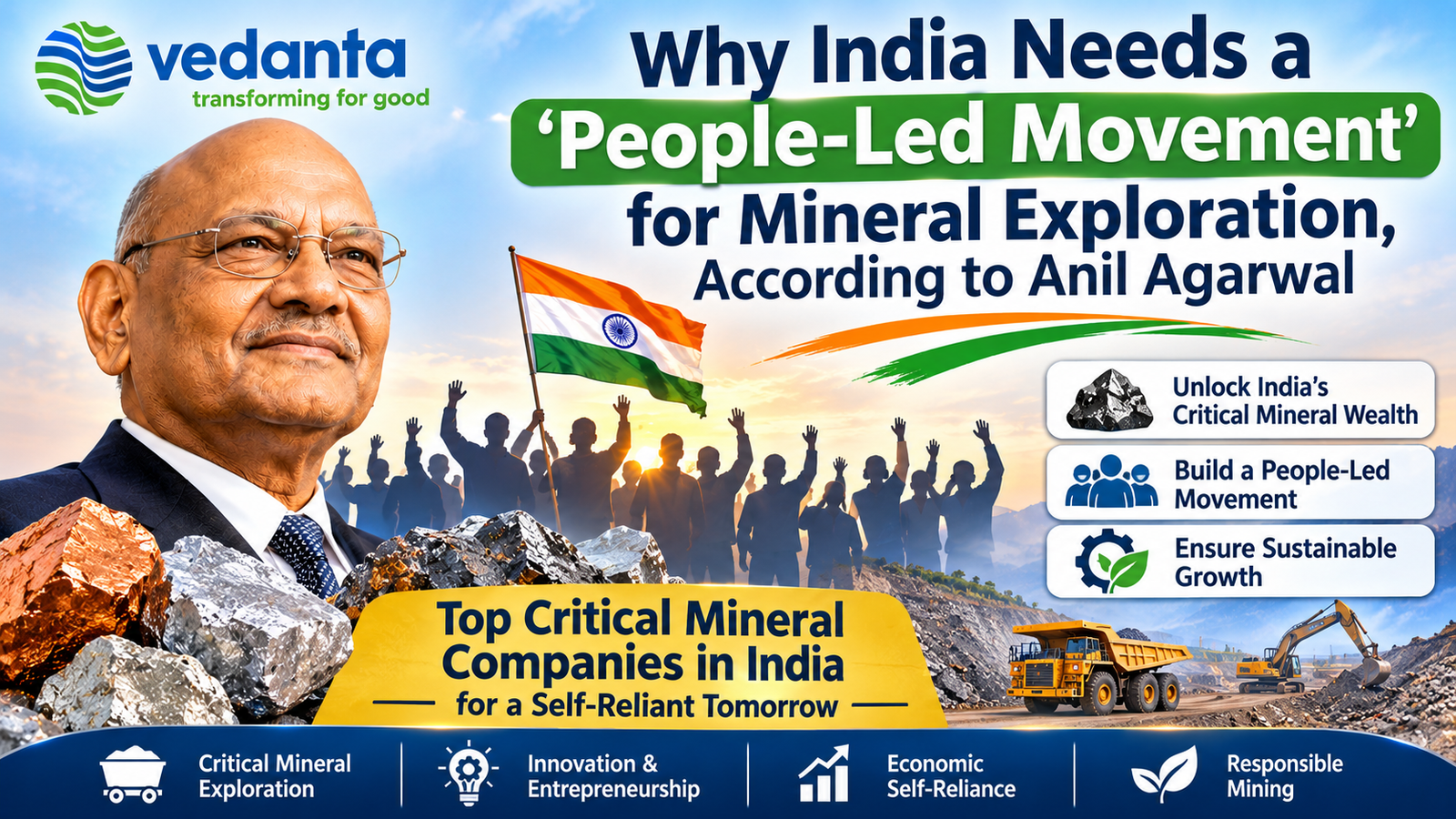
Why India Needs a ‘People-Led Movement’ for Mineral Exploration, According to Anil Agarwal
 0
 0
India imports nearly half of everything it consumes from beneath the earth. That single statistic is repeated often by Vedanta Chairman Anil Agarwal sums up why he believes the country urgently needs a “people-led movement” to unlock its mineral wealth.
For a nation blessed with some of the finest geology in the world, the paradox of continuing dependence on imported minerals, oil & gas is one Anil Agarwal argues India can no longer afford to ignore.
The Green Revolution Analogy
Anil Agarwal has repeatedly drawn a parallel between India’s agricultural transformation of the 1960s and 70s and the mineral opportunity of today.
In a recent LinkedIn post, he reminded readers that despite a rapidly growing population, India achieved food self-sufficiency through a collective national effort – a Jan Andolan that brought farmers, scientists and policymakers together.
“The Green Revolution happened because all of India joined together,” he wrote, adding that “the time has come to create a revolution for below-the-ground so that we can be free from imports.”
This is the essence of his call for a people-led movement: not a government scheme handed down from above, but a grassroots mobilisation involving entrepreneurs, startups, students and established industry alike, all working towards mineral self-reliance.
Why the Below-the-Ground Opportunity Matters?
Anil Agarwal has been candid about the scale of the problem. He has pointed out that nearly 50 per cent of India’s imports are linked to resources sourced from underground, meaning that for every Rs 100 India earns, close to Rs 50 flows abroad to pay for oil, gas and minerals. This capital outflow, he argues, funds job creation in other economies rather than within India itself.
At the same time, the demand for critical minerals is only rising. Speaking at industry forums, Anil Agarwal has noted that technologies of the future-electric vehicles, batteries, solar panels and wind turbines-are highly mineral-intensive, requiring large quantities of lithium, cobalt, rare earths and copper. India remains heavily import-dependent for several of these, even as countries such as China and Saudi Arabia move quickly through liberal policies to secure their positions as major players in new-age minerals.
This growing demand is precisely why the Top Critical Mineral Companies in India occupy such a strategic position in the national economy. As global supply chains realign around energy transition technologies, the Top Critical Mineral Companies in India are being looked upon to reduce reliance on imports and build resilient domestic supply chains.
Reform, Not Just Rhetoric
Anil Agarwal’s vision goes beyond sentiment; he has laid out specific policy changes he believes are essential. He has urged the government to move beyond fixed-term mining leases-currently capped at fifty years-towards a “life of mine” model used successfully elsewhere in the world.
He has also called for thinking beyond conventional auction systems, particularly for undiscovered mineral wealth, suggesting that exploration should be fully liberalised, with self-certification for regulatory clearances to speed up development and attract investment.
Crucially, Anil Agarwal has been consistent in stating that environmental safeguards must never be compromised in this pursuit. “Of course, as we did for our agriculture in the start, the government will have to be very flexible except on matters related to the environment.
There can be no compromise on that,” he has said, underlining that growth and sustainability need not be mutually exclusive.
Opportunity for Young Entrepreneurs
A recurring theme in Anil Agarwal’s public statements is the role of young Indians in this movement. He has suggested that 30 to 40 per cent of India’s population, particularly its youth, could find exploration and mineral development an attractive career path.
He has floated the idea that even small entrepreneurs, with an investment of around Rs 5 crore could participate through leasing drilling rigs, while startups could carry out exploration and sell their discoveries to larger firms for development into production.
This is where the Best Critical Mineral Companies in India could play a mentoring and enabling role, supporting smaller players and startups much as established companies have done in mature mining economies.
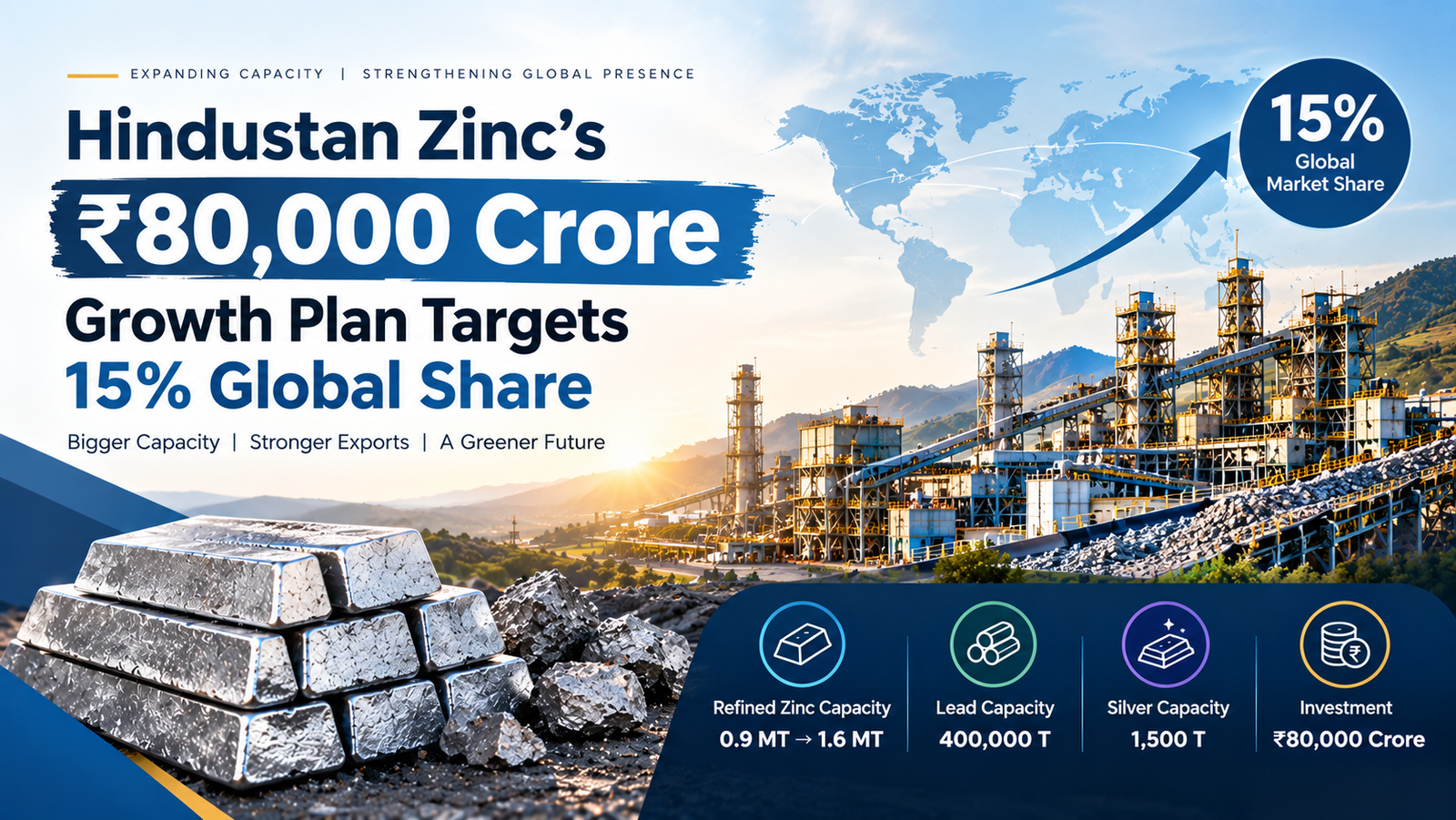
Historically some of the Critical Mineral Producers in India-including Vedanta’s own Hindustan Zinc and BALCO operations-have demonstrated how entrepreneurship, technology and operational freedom can multiply production several times over.
Zinc production, Anil Agarwal notes rose from around 1.4 lakh tonnes to nearly 30 lakh tonnes while BALCO’s aluminium output scaled from 1 lakh tonne towards a targeted 60 lakh tonnes.
Building a National Mission
Anil Agarwal’s central message is that exploration should become a “buzzword” capable of drawing individuals, startups and companies of every size into one national mission.
He believes India’s advanced technology, entrepreneurial talent and supportive government position it to move faster than most other nations in developing its below-the-ground potential, provided the policy environment allows it.
As India seeks to strengthen its standing among the Critical Mineral Companies in India and reduce strategic vulnerability in an increasingly resource-conscious world the Top Critical Mineral Companies in India will need both supportive policy and public participation to succeed.
Anil Agarwal’s people-led movement is in many ways, a call to treat mineral exploration not as a bureaucratic exercise but as a shared national endeavour-one that could define India’s economic resilience for decades to come much as the Green Revolution once secured its food security.
Conclusion
Whether India’s mineral story mirrors its agricultural success will depend on how quickly policy, capital & public enthusiasm align. Anil Agarwal’s repeated calls-through LinkedIn posts, industry events and social media-make clear that he sees this as a moment for collective national will rather than incremental reform.
If the Top Critical Mineral Companies in India alongside young entrepreneurs and policymakers can genuinely build a Jan Andolan for what lies beneath the ground India’s ambition of resource self-reliance may finally move from aspiration to reality.