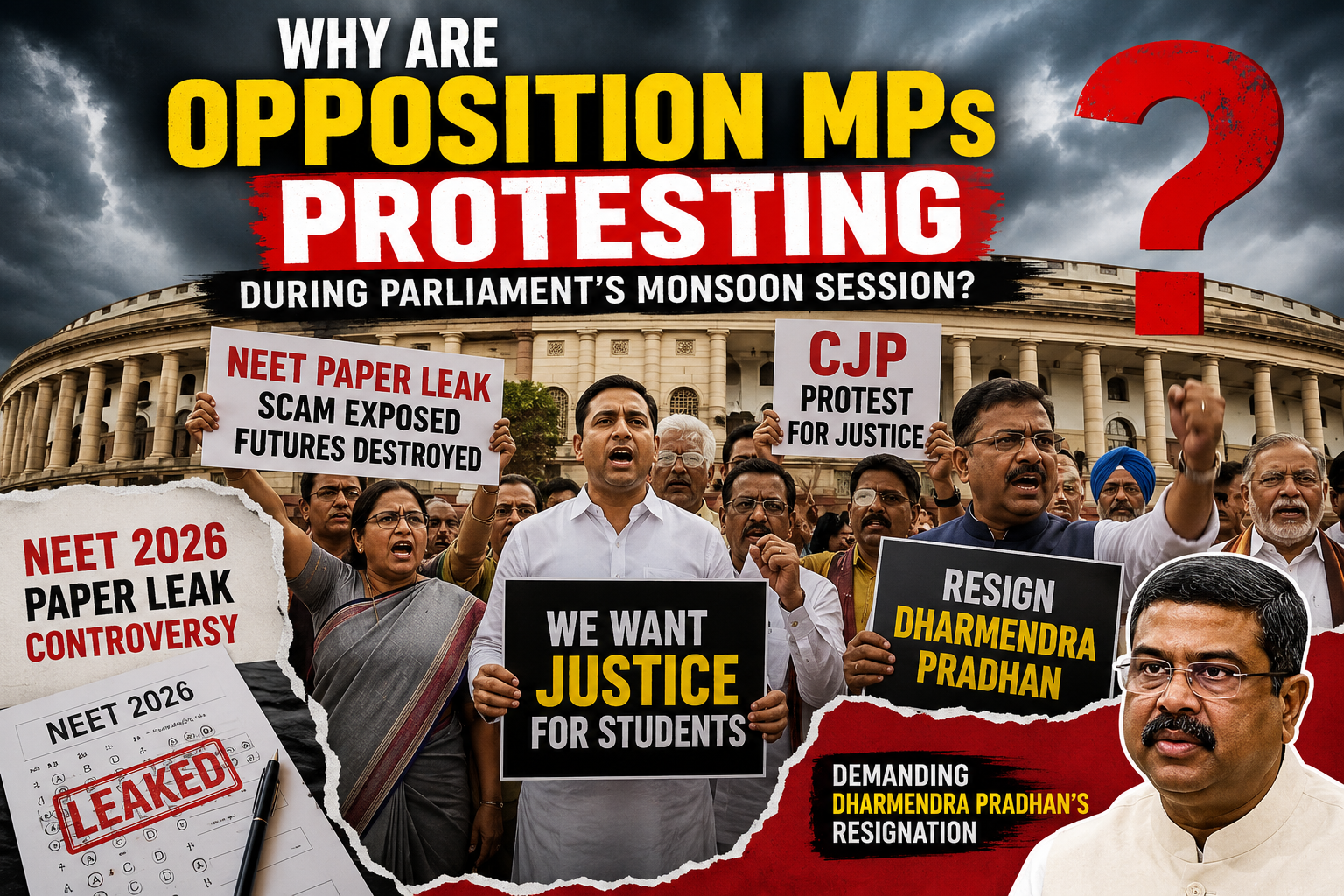
Why Are Opposition MPs Protesting During Parliament’s Monsoon Session? Here’s What Happened
 0
0
 0
0
The Monsoon Session of Parliament has been witnessing repeated disruptions for the last few days, as the opposition protests in Parliament over the alleged paper leak controversy of NEET 2026. Recently, the demonstrators of the Cockroach Janta Party (CJP) were doing a ‘Sansad Chalo’ march, where Delhi Police used tear gas and baton charges to stop them. It is important to know that protesters were demanding Dharmendra Pradhan’s resignation– the Union Education Minister- fair conduct of exams, and solid education reforms.
What is the Reason for the Protest in Parliament by Oppositions?
As per the monsoon session news, Rahul Gandhi’s parliament protest is primarily triggered after the nationwide protest after the alleged NEET paper leak controversy. Opposition parties, including Congress, argue that the integrity of one of the country’s most prestigious exams has been affected. They also said that the BJP government has miserably failed to protect the students’ interests.
During this protest, opposition MPs are demanding:
- A comprehensive and fair discussion on the NEET paper leak issue in Parliament.
- The resignation of Dharmendra Pradhan, the Union Education Minister.
- Accountability for the actions taken by police on students during the protest.
- Solid actions to restore people’s confidence in India’s examination system.
What Exactly Happened in the Monsoon Session?
Since day one of the monsoon session, MPs of opposition parties have been protesting inside the house and its premises. Some MPs have also worn black dresses to symbolize the day as a ‘black day’ in the history of India. They were also raising slogans and demanding the resignation of the education minister.
This protest in parliament has resulted in frequent adjournments of the Lok Sabha as well as the Rajya Sabha. Due to this, the proceedings of parliament have struggled to progress. Opposition parties have clearly mentioned that they will continue their protest in the house until their demands are resolved.
Outside parliament, senior leaders of the opposition, including Rahul Gandhi and Priyanka Gandhi Vadra, participated in the protest and highlighted the incident as a crisis that is affecting the future of students.
What is the response of the government to this?
The Centre has said that it is ready to debate the controversy on the NEET paper leak. Kiren Rijiju, parliamentary affairs minister, and other leaders of the party have urged the opposition leaders to join a structured discussion instead of disrupting the proceedings daily.
However, the leading party has still not accepted the demand for the resignation of the education minister before any discussion. This disagreement has led to prolonged deadlocks.
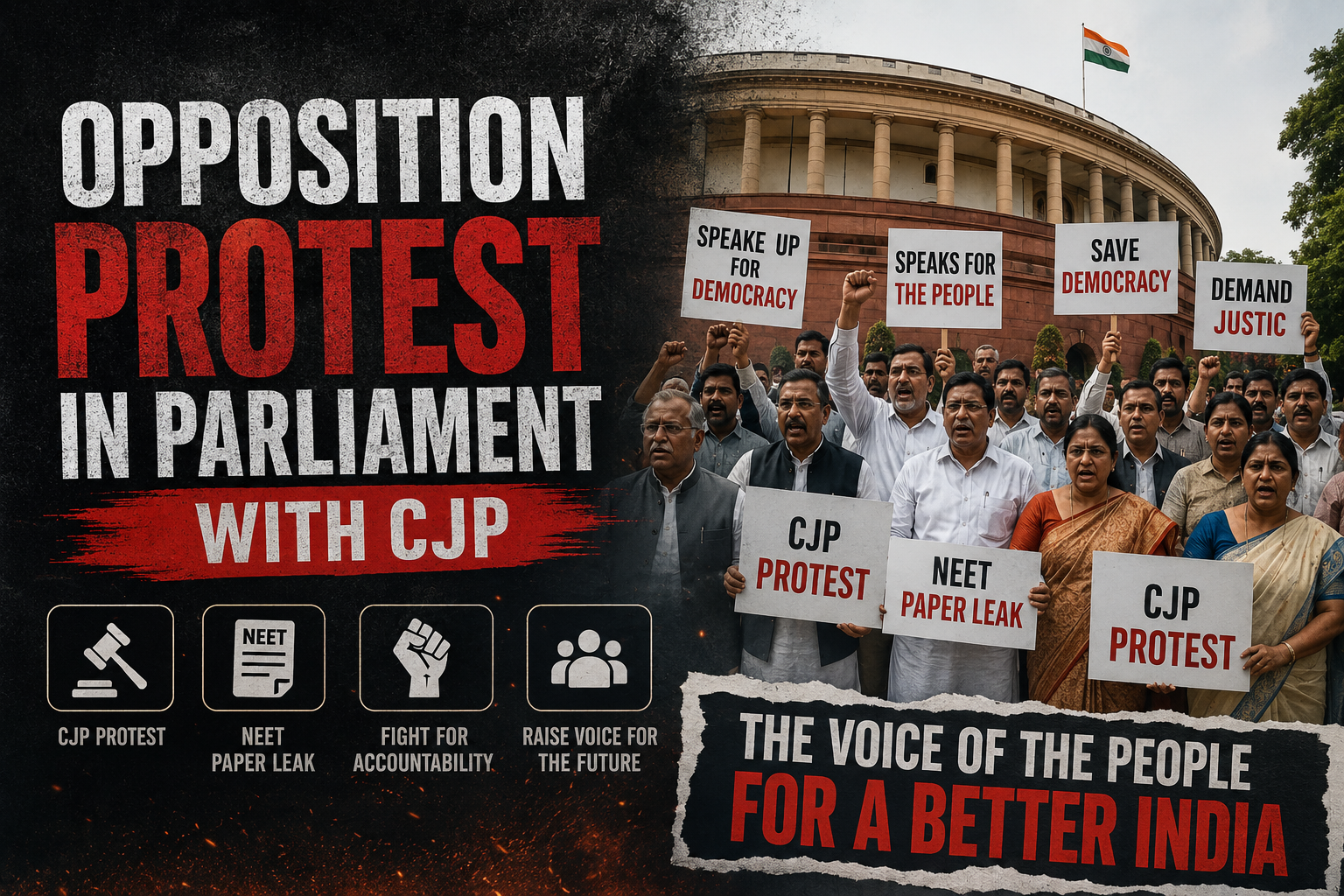
What is the Connection of Opposition Protest in Parliament with CJP?
Opposition protest in parliament is linked to the demonstrations that are taking place in the capital city and other parts of the country. Youth organizations and student groups have been protesting constantly over alleged NEET paper leak, examination irregularities, employment opportunities, and the resignation of the education minister.
The whole situation intensified when police actions were taken against demonstrators in New Delhi, prompting opposition to accuse the central government of suppressing such protests. Many leaders have criticized the police response and said that they treated the peaceful march unfairly.
After all this, Narendra Modi, the Honorable Prime Minister, has finally responded and announced fast-track courts to address the NEET paper leak matter and promised strict action against those who were involved in the unethical act. Nonetheless, opposition parties and protesters are continuously demanding ministerial accountability with solid institutional reforms.
What is the Political Significance of this Protest?
The ongoing protest in parliament has turned the alleged NEET paper leak matter from an educational issue to political confrontations. Opposition party leaders, including Rahul Gandhi, argue that such issues reflect huge concerns over irregularities and governance, youth welfare, and examination integrity. The government, on the other hand, has already clarified that the reforms are in the pipeline and legal action will be taken against culprits.
Current Status
With countrywide protests, parliament proceedings remain disrupted. However, it is important to know that the issue has become quite bigger and is defining the flashpoints of Indian politics. Talking about the current status, the CJP protesters are doing their peaceful sit-in at Jantar Mantar, while opposition parties are creating deadlocks to affect the Monsoon Session so that their demands can be heard and resolved.